Nootropic drinks are no longer a niche idea, and nootropic drinks are expected to grow at a CAGR of 10.0% from 2026 to 2033, which shows how quickly people are moving from pills to ready-to-drink options for mental performance.
| Question | Short Evidence-Based Answer |
|---|---|
| 1. What is a nootropic drink? | A nootropic drink is a beverage that contains ingredients such as caffeine, L-theanine, tea catechins, cocoa flavanols, or electrolytes that may support focus, alertness, or overall cognitive performance without making disease-related claims. |
| 2. What is the best nootropic drink ingredient combo? | Research frequently highlights a caffeine plus L-theanine stack, often around a 2:1 L-theanine:caffeine ratio, as a useful pattern for calm focus, which we explain in detail in our caffeine + L-theanine UK guide. |
| 3. Are natural tea-based nootropic drinks effective? | Tea from Camellia sinensis, especially shade-grown matcha, naturally provides caffeine and L-theanine in ratios that several studies associate with improved attention and reduced jitter; you can learn more in our Camellia sinensis nootropic guide. |
| 4. Can hydration drinks be nootropic? | Yes, because even mild dehydration can impair mental performance, drinks that combine fluids with electrolytes and sometimes gentle stimulants sit firmly in the "nootropics drink" category; we cover this in the hydration and energy guide. |
| 5. Are cocoa or blueberry drinks real nootropic options? | Several controlled trials associate cocoa flavanols and berry polyphenols with short-term changes in cerebral blood flow and aspects of attention or working memory, which is why we consider flavanol-rich hot chocolate or berry smoothies as natural nootropic drink options, expanded in our cocoa flavanols cognition guide. |
| 6. Where can I explore nootropic products in general? | For capsules, powders, and other formats that can complement a nootropics drink routine, you can browse our curated overview at HerbalNootropics.life nootropic products. |
| 7. Do nootropic drinks replace healthy habits? | No beverage can compensate for chronically poor sleep, inactivity, or an ultra-processed diet; drinks work best as optimisers on top of a solid lifestyle foundation. |
Transform your morning coffee into a cognitive powerhouse. Java Brain's tasteless liquid formula combines L-Theanine, Ginkgo Biloba, and Quercetin to work synergistically with caffeine, targeting neuroinflammation while supporting focus and mental clarity.
Most serious nootropic drinks are not random "energy" blends, they draw on a small group of ingredients that appear repeatedly in research on alertness, fatigue, and cognitive performance.
We can group the usual suspects into four broad categories that you will see referenced throughout our ingredients guides and in product labels.
Caffeine is the most widely used psychoactive compound on the planet and is central to almost every nootropic energy drink on the market. L-theanine, an amino acid found in tea, can modulate caffeine's stimulatory profile, and controlled studies suggest that certain caffeine plus theanine combinations may support attention and reduce jitter in some people.
Tea from Camellia sinensis, especially green tea and matcha, carries catechins such as EGCG alongside caffeine and L-theanine, which together form a naturally occurring nootropic cocktail. These catechins are polyphenols, so they may influence oxidative stress and cerebral blood flow, although high-dose extracts can carry safety considerations that whole-drink formats generally avoid.
Cocoa flavanols and berry anthocyanins are central in research on "edible nootropics", with short-term trials showing modest improvements in certain cognitive tasks after polyphenol-rich drinks. A hot cocoa made with high-flavanol cocoa powder or a blueberry smoothie can be a realistic "everyday" nootropics drink, especially when combined with stable blood sugar and good hydration.
Even 1 to 2 percent fluid loss can affect attention and mood, which is why many functional beverages position themselves as hydration plus cognition tools rather than harsh stimulants. Electrolytes like sodium, potassium, and magnesium help you retain and use water effectively, so they sit naturally in a nootropics drink framework.
If you ask many enthusiasts what the "best nootropic drink" is, they often point to a simple combination, moderate caffeine plus adequate L-theanine in coffee, tea, or an RTD can.
Our dedicated caffeine L-theanine stack guide walks through the mechanisms and dosing ranges step by step, but we will summarise the practical highlights here.
Caffeine blocks adenosine receptors, which can increase alertness and reduce perceived fatigue, although some people experience shakiness or anxiety at higher intakes.
L-theanine appears to increase alpha brain wave activity and may smooth the subjective experience of caffeine, which is why many people report "cleaner" focus when both are combined.
In supplement form, a 2:1 L-theanine to caffeine ratio, for example 200 mg theanine with 100 mg caffeine, is a frequently cited starting point, although individual responses vary and genetics matter.
Matcha and other shade-grown teas naturally approach a theanine to caffeine ratio between about 0.6:1 and 1:1, which is part of why traditional tea ceremonies are associated with calm concentration rather than nervous stimulation.
We always recommend tracking your response, keeping a log for a couple of weeks, and staying within widely accepted daily caffeine limits, especially if you are sensitive or have cardiovascular concerns.
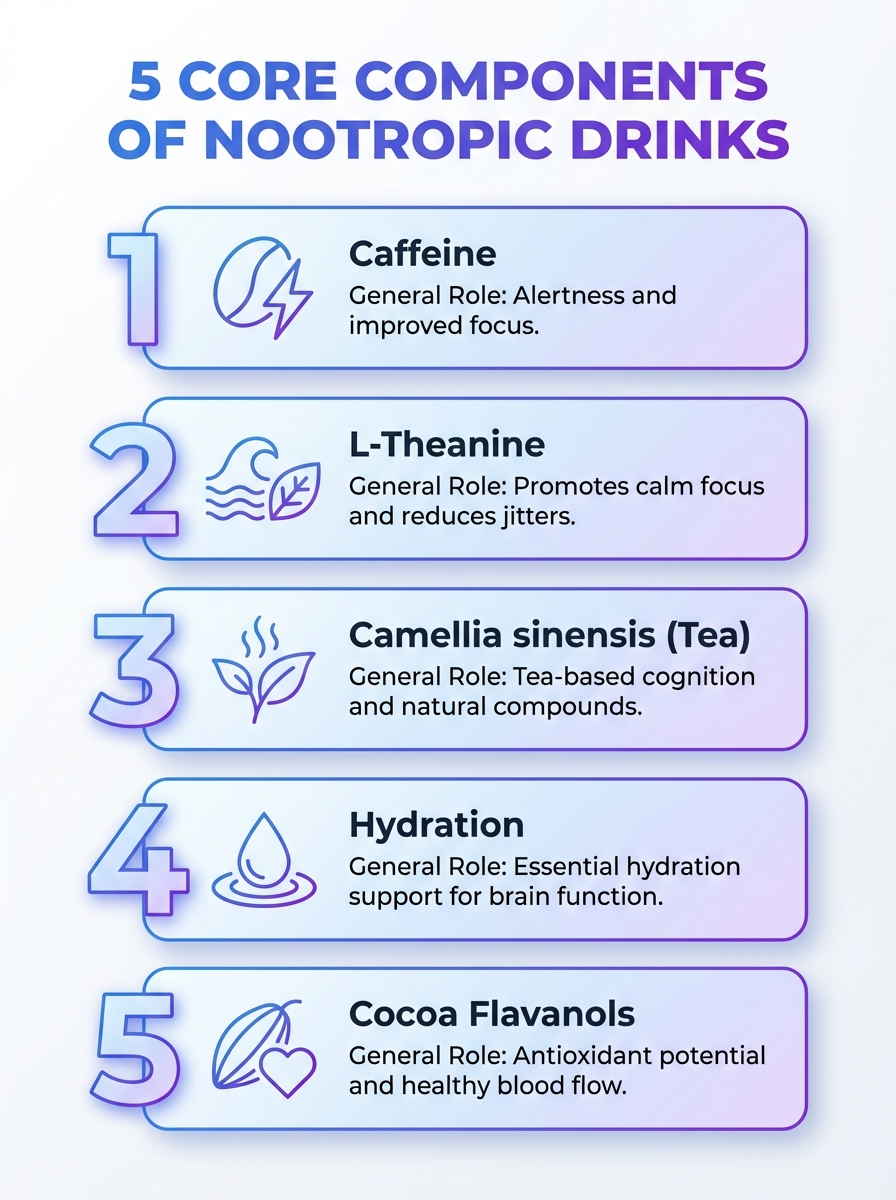
Discover the five core components of nootropic drinks and how each ingredient collaborates to enhance focus and mental clarity.
Tea is arguably the original nootropic drink, and modern research on Camellia sinensis gives us a more precise view of why people have used it for centuries for both alertness and calm.
In our complete guide to tea's nootropic compounds, we detail how different preparations change the ratios of caffeine, L-theanine, and catechins.
Matcha is shade grown, which tends to raise L-theanine content while maintaining caffeine, so a ceremonial matcha latte gives you a natural version of the caffeine + theanine stack many synthetic drinks try to copy.
Controlled trials indicate that theanine plus caffeine can support attention and focus, and reduce subjective tiredness, and matcha aligns closely with the 0.6:1 to 1:1 theanine to caffeine ratio discussed in our matcha-specific guide.
Moderate caffeine, meaningful catechin content, and some L-theanine.
Slightly higher caffeine, more theaflavins, still a nootropic drink candidate.
Intermediate profiles that some people find gentler for all-day sipping.
For people who are caffeine sensitive, weaker brews or shorter steep times can still provide polyphenols with a milder stimulatory effect, which might be a better fit for late afternoon or early evening.
Many people overlook hydration when they search for the best nootropic drink, yet mild dehydration alone can reduce concentration, increase fatigue, and worsen headaches.
Our hydration and energy guide explains how cellular hydration and electrolyte balance contribute to ATP production and brain function.
A hydration-focused nootropics drink typically contains water, key electrolytes, sometimes low-dose caffeine, and often nootropic adjuncts such as L-theanine or simple carbohydrates for stable energy.
The goal is not an intense buzz but steady alertness and less of the cognitive drag that comes from under drinking or relying purely on stimulants.
Remember that most studies linking hydration to cognitive performance involve water and electrolytes rather than extreme stimulant doses, so we advise building your day around fluids first, then layering nootropic formulas on top if needed.
Not all nootropic drinks need to include caffeine, and some people prefer evening or late-afternoon beverages that aim to support brain blood flow and long term brain health markers instead of acute stimulation.
Our cocoa flavanols cognition guide summarises research on cocoa, blueberries, and other polyphenol-rich foods used in drinks and smoothies.
Randomised trials have found that cocoa flavanol drinks can acutely increase cerebral blood flow and, in some cases, modestly influence working memory or reaction time shortly after consumption.
In practice, this could look like a high-flavanol hot chocolate in the morning or mid-afternoon made with minimally processed cocoa powder and moderate sugar, paired with a balanced meal.
Blueberry smoothies and mixed berry drinks bring anthocyanins, which have also been studied for their potential contributions to attention and memory tasks after single or repeated servings.
Again, effect sizes are generally small, but consistent intake of berry-rich drinks appears compatible with overall brain health strategies and slots naturally into breakfast or snack routines.
Many people choose to combine a modest dose caffeine + L-theanine drink early in the day with a polyphenol-rich cocoa or berry drink later, using different mechanisms across the day.
Because polyphenol drinks are usually food-like, they fit well into a pattern that respects sleep, diet quality, and movement, rather than encouraging people to chase stronger stimulants.
To help you decide which nootropics drink makes sense for your goals, it is useful to compare common formats side by side, paying attention to cognitive targets, stimulant load, and time of day.
The table below gives a simplified overview of how different nootropic drink types typically line up.
| Drink Type | Typical Ingredients | Main Cognitive Focus | Best Time Of Day |
|---|---|---|---|
| Nootropic energy drink | Caffeine, L-theanine, B-vitamins, sometimes taurine or herbal extracts | Alertness, focus, reduced fatigue | Morning or early afternoon to avoid sleep disruption |
| Tea / matcha drink | Caffeine, L-theanine, catechins | Calm focus, sustained attention | All day, timing caffeine away from bedtime |
| Hydration-focused drink | Water, electrolytes, sometimes low-dose caffeine or theanine | Reduced brain fog from dehydration, steady energy | Throughout the day, especially around work and exercise |
| Cocoa / berry drink | Cocoa flavanols, berry polyphenols, milk or plant alternatives | Working memory, brain blood flow, long term brain health support | Morning or afternoon, often with meals |
| Sleep-supporting drink | Non-stimulant herbs, magnesium, glycine, sometimes theanine | Relaxation and sleep quality, which indirectly improves next day focus | Evening, 1 to 2 hours before bed |
Regardless of format, remember that dosing and timing are crucial for both safety and subjective benefit, especially with caffeine containing beverages. We encourage you to consult evidence-based dosing references and a healthcare professional before making large changes to your daily intake of stimulants or concentrated active ingredients.
Because nootropic drinks are often marketed as lifestyle products rather than medicines, it can be easy to forget that many contain pharmacologically active ingredients like caffeine in substantial amounts.
Our nootropic side effects guide covers capsules and powders, and many of the same principles apply to beverages.
High caffeine intake in a short period can cause anxiety, palpitations, and sleep problems in some individuals, especially when combined with other stimulants or consumed repeatedly throughout the day.
Some formulas also contain sugar levels similar to traditional soft drinks, which can undermine health goals and contribute to energy crashes.
Track your total daily caffeine intake from all sources, not just the can in your hand.
Avoid strong nootropic energy drink intake within 6 to 8 hours of bedtime to protect sleep.
Test one new product at a time so you can attribute any unwanted effects correctly.
Always read labels carefully, start at the lower end of serving recommendations, and talk with your doctor or pharmacist if you are on prescription medications or have underlying conditions.
Nootropic drinks sit at the intersection of food, supplement, and, in some cases, novel ingredient regulations, which means the rules differ between countries.
Our article on nootropics legality in the UK outlines how authorities tend to view cognitive enhancement substances, many of which can appear in drink formulations.
Most tea, coffee, cocoa, and berry based nootropic drinks fit comfortably into traditional food categories, especially when they are not fortified with high doses of synthetic compounds.
More experimental formulas that use pharmaceutical style ingredients or high-dose extracts may face tighter rules, so reputable brands aim to stay within food or supplement regulations and avoid drug-like claims.
Understanding the regulatory framework helps you interpret label language, especially when you see aggressive promises or vague blend descriptions that do not list precise dosages.
We encourage choosing products from brands that are transparent about their ingredients, testing, and compliance with local regulations rather than chasing the strongest marketing claims.
Instead of searching endlessly for a single "best nootropic drink", we suggest building a small toolkit of beverages that support different phases of your day while respecting sleep, appetite, and long term health.
Below is a sample structure that you can adapt with input from your healthcare professional and your own tracking.
Hydration drink with electrolytes, followed by a moderate caffeine + L-theanine drink such as matcha or a clearly dosed nootropic energy drink.
Water or herbal tea for hydration, optional low dose caffeine if you tolerate it and still need focus.
Polyphenol drink like cocoa or a berry smoothie if you want a non stimulant cognitive supplement.
Non caffeinated relaxing drink if needed, focusing on sleep quality as the ultimate cognitive enhancer.
We recommend using a simple journal or app to record what you drink, when, and how you feel in terms of focus, mood, and sleep over at least two weeks.
Small, consistent changes combined with quality sleep, nutrient dense food, and movement habits nearly always outperform high-dose, short-term experiments with strong stimulants.
Nootropic drinks are one tool in a much larger toolkit that includes sleep, diet, exercise, stress management, and, for some people, carefully chosen supplements.
On our site we provide evidence-based overviews of natural nootropics, dosing frameworks, and product types so that you can decide where drinks slot in for you.
Baseline support such as caffeine, L-theanine, polyphenols, and hydration
More targeted ingredients in precise doses if appropriate for your needs
In many cases, the most practical approach is to let beverages handle baseline support such as caffeine, L-theanine, polyphenols, and hydration, while capsules or powders provide more targeted ingredients if appropriate.
Our curated overview of nootropic products and stacks shows how different formats can be combined, always with the understanding that none of them are medical treatments.
No supplement or nootropics drink can make up for chronic sleep restriction, sedentary behaviour, high stress, and a nutrient poor diet.
Used thoughtfully, however, a well designed nootropic drink routine can make good days a little more productive and demanding days a bit more manageable.
Nootropic drinks bring together caffeine, L-theanine, tea catechins, cocoa flavanols, berry polyphenols, and hydration science in a format that most of us already rely on multiple times per day.
From matcha lattes and high flavanol hot chocolate to carefully dosed nootropic energy drinks and electrolyte based focus beverages, the key is to understand the ingredients, respect dosing, protect your sleep, and treat drinks as optimisers sitting on top of a solid lifestyle rather than as shortcuts or medical solutions.
Discover our comprehensive guides on natural nootropics, supplement stacks, and evidence-based cognitive enhancement strategies.
Browse Nootropic Products