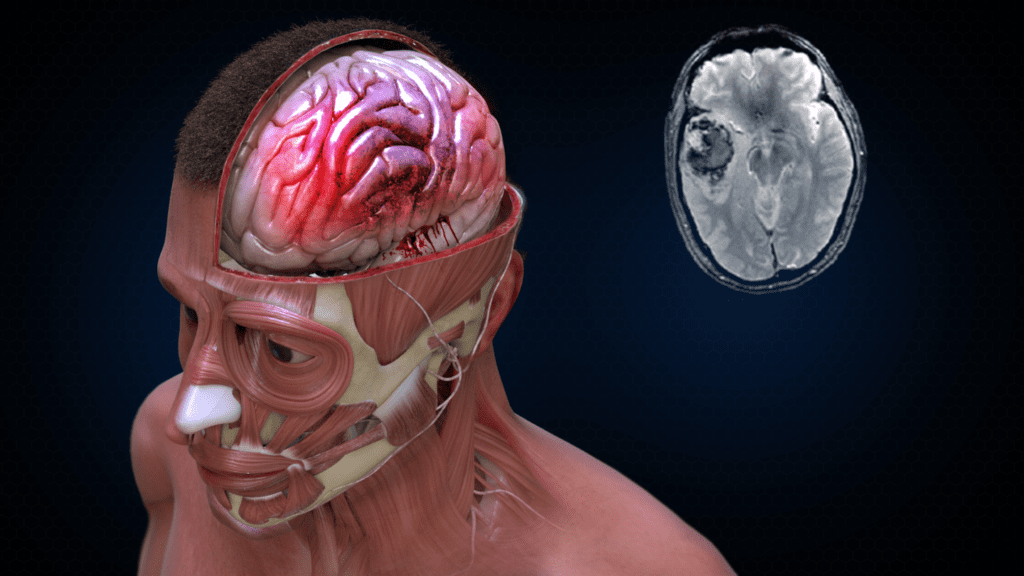
Traumatic brain injury can leave people struggling with memory, attention, and daily thinking skills long after the initial trauma. In the 2025 LOCATE trial, a Phase 3 study of 590 patients, L-oxiracetam improved cognitive scores almost 9 points more than placebo at 90 days, a meaningful gain for mild to moderate TBI survivors.
Essential information about L-oxiracetam and its role in traumatic brain injury recovery
| Question | Answer |
|---|---|
| What is L-oxiracetam in traumatic brain injury? | L-oxiracetam is the pure S-enantiomer of oxiracetam, a racetam nootropic. The 2025 LOCATE trial shows it can significantly improve cognitive recovery in mild to moderate TBI compared to placebo and racemic oxiracetam. |
| How large and rigorous was the main L-oxiracetam TBI study? | The LOCATE trial enrolled 590 adults across 51 hospitals in China in a double-blind, randomized design, which is Level 1 clinical evidence and currently the strongest data set for oxiracetam-class drugs in TBI. |
| How much better was cognition with L-oxiracetam vs placebo? | At 90 days, L-oxiracetam patients improved by 20.45 points on the LOTCA test versus 11.47 with placebo, a nearly 9-point difference that indicates moderate effect size and clinically relevant gains. |
| Is L-oxiracetam better than standard oxiracetam after TBI? | Yes. L-oxiracetam outperformed the 6 g/day racemate on LOTCA with a 4.54-point advantage at 90 days, and showed fewer treatment-related adverse events, supporting the idea that the S-enantiomer is both more effective and better tolerated. |
| Which cognitive problems after TBI does L-oxiracetam help most? | LOCATE reported benefits in visual and spatial perception, motor praxis, visuomotor organization, thinking operations, and domains related to attention and concentration, which are core deficits for many mild to moderate TBI patients. |
| How does L-oxiracetam fit within the broader nootropics landscape? | Within the broader category of racetams and cognitive enhancers discussed in our overview of nootropics, L-oxiracetam stands out as one of the few with Phase 3 RCT data in a well-defined clinical population. |
| Where can readers learn more about related compounds? | For mechanism and dosing context, see our detailed oxiracetam cognitive enhancement guide, which explains how the racemate works and how L-oxiracetam builds on that pharmacology. |
This information is based on peer-reviewed clinical trial data
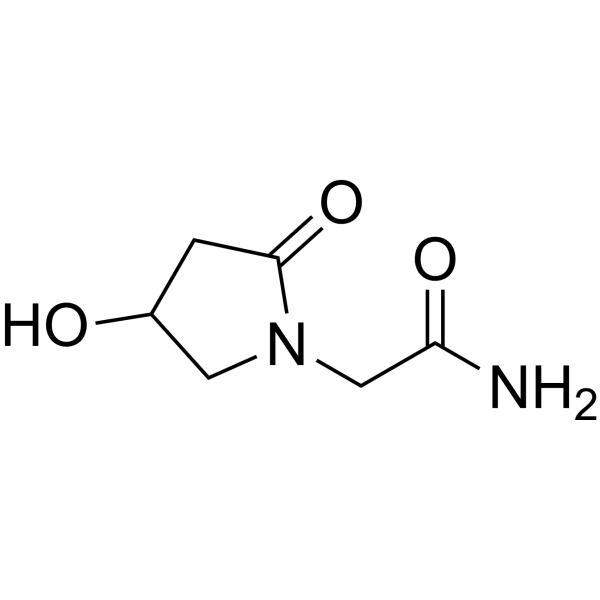
L-oxiracetam is the S-enantiomer of oxiracetam, a synthetic racetam that has been studied for decades for memory and learning. Oxiracetam itself is a 2-pyrrolidone derivative known to modulate AMPA receptors and enhance acetylcholine signaling, which supports synaptic plasticity and cognitive processing.
In the context of traumatic brain injury, these mechanisms are attractive because TBI disrupts glutamatergic transmission, cholinergic tone, and neuronal energy metabolism. The LOCATE trial deliberately chose L-oxiracetam to test whether isolating the more active stereoisomer could amplify the benefits seen with standard oxiracetam while reducing side effects.
From a pharmacology standpoint, this is a classic example of moving from a racemate to a chiral-optimized molecule to target cognition more precisely.
Enhances glutamatergic transmission for better synaptic plasticity
Boosts acetylcholine signaling critical for memory and learning
Explore premium nootropic compounds for cognitive support
A rigorous Phase 3 study that sets the gold standard for TBI research
The LOCATE trial is the pivotal study that put L-oxiracetam on the map for TBI. Conducted from 2019 to 2024 across 51 hospitals in China, it enrolled adults with mild to moderate traumatic brain injury, defined by a Glasgow Coma Scale (GCS) score of 10 to 15.
Treatment started within 72 hours of injury, which reflects a realistic acute-care window for hospital-managed TBI.
Multicenter, double-blind, placebo-controlled design — Neither participants nor clinicians knew which treatment was given
Change in the Loewenstein Occupational Therapy Cognitive Assessment (LOTCA) score at 90 days, chosen because it covers multiple cognitive domains relevant to TBI recovery including visual perception, spatial perception, motor praxis, visuomotor organization, thinking operations, attention, and concentration.
Although its exact working mechanism remains unknown, Oxiracetam has been shown to provide powerful cognitive support:
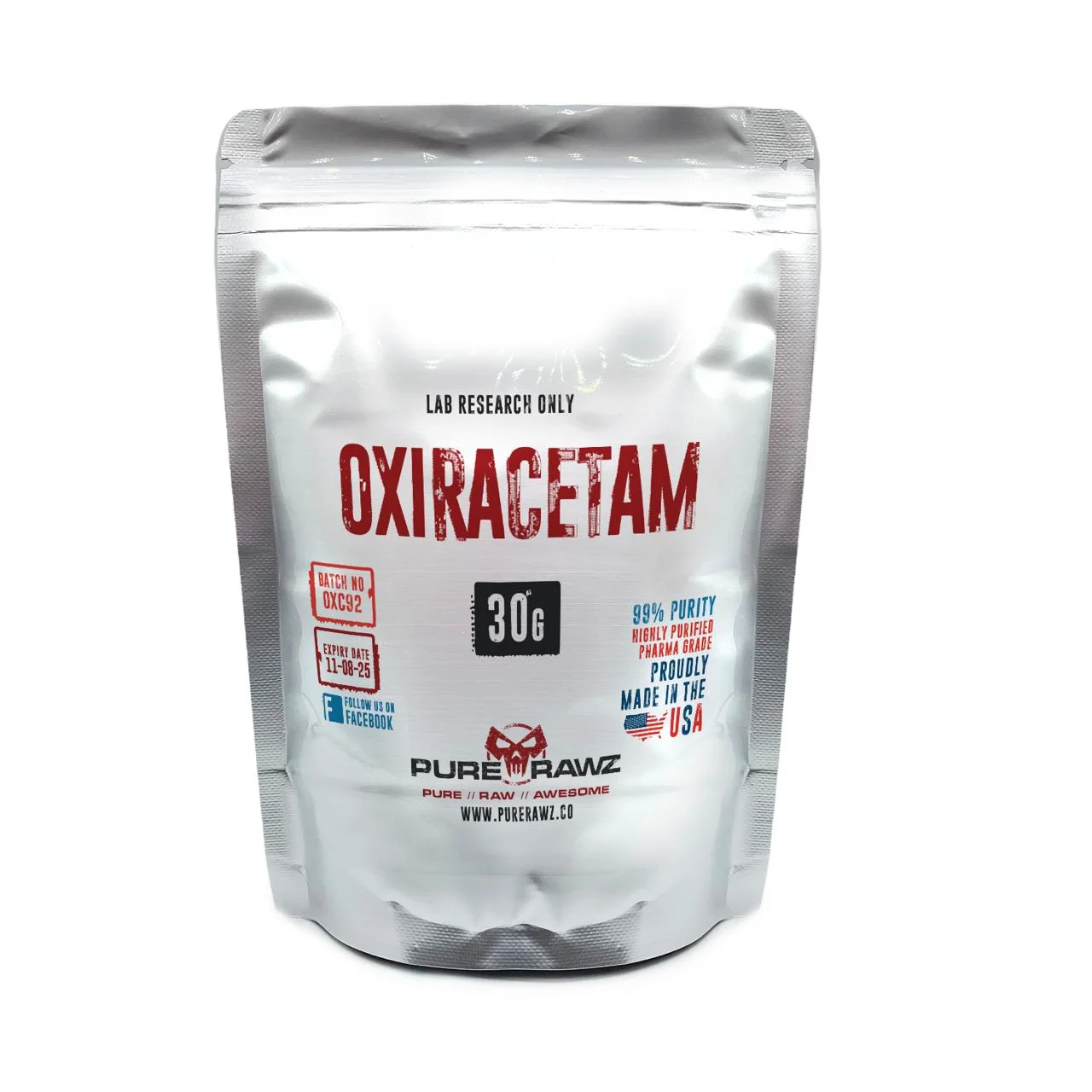
Premium quality nootropic supplement
The data shows statistically significant and clinically meaningful improvements in cognitive function
Secondary outcomes, such as Montreal Cognitive Assessment (MoCA) scores, also improved at 90 days:
A smaller but statistically significant advantage that supports a broader cognitive benefit across multiple assessment tools.
These gains reflect better performance in daily cognitive tasks such as:
At 14 days, patients on L-oxiracetam improved their LOTCA scores by 13.76 points versus 7.45 with placebo, a 6.31-point advantage with P < 0.001, indicating that cognitive gains began as early as the second week after traumatic brain injury.
A key strength of the LOCATE trial is that it directly compared L-oxiracetam to standard racemic oxiracetam rather than only to placebo. On the 90-day LOTCA change, L-oxiracetam had a least-squares mean advantage of 4.54 points over the 6 g/day racemate, with P < 0.001.
This suggests that the S-enantiomer is not just equivalent, but clinically superior for cognitive recovery after TBI.
From our perspective, this supports a broader trend in pharmacology: optimizing chiral molecules to capture the active stereoisomer and discard the less helpful or more side-effect-prone component.
LOCATE used 6 g/day of oxiracetam versus 4 g/day of L-oxiracetam, yet the lower total dose of the S-enantiomer still performed better, which is meaningful for future prescribing and product development.
Explore complementary approaches to brain health recovery and cognitive support
For racetams, the classic dosing for oxiracetam in cognitive studies ranges from 800 mg to 2,400 mg daily, usually split into two or three doses, as we outline in our oxiracetam guide.
The LOCATE trial measured specific cognitive functions to understand exactly where L-oxiracetam helps most
The LOCATE trial did not limit itself to a single global score. It broke down LOTCA and related tests into specific domains, which helps clinicians predict which patients might benefit most.
Improved ability to recognize, interpret, and make sense of visual information in the environment
Enhanced understanding of spatial relationships, distances, and navigation in three-dimensional space
Better planning and execution of coordinated movements and skilled motor actions
Improved coordination between visual input and motor output for complex tasks
Enhanced executive functions including problem-solving, reasoning, and decision-making
Better sustained focus, selective attention, and ability to concentrate on tasks
The pattern of benefit suggests that L-oxiracetam is not only a memory enhancer but also a broad cognitive support that could interact favorably with occupational and physical therapy programs that target the same skills.
Safety is critical in TBI, where patients may already be on multiple medications and often have comorbid conditions
In LOCATE, the overall incidence of any adverse event was similar across all three groups, indicating that adding either form of oxiracetam did not materially increase global adverse event rates compared to standard care plus placebo.
P = 0.980 — No statistically significant difference between groups
Where L-oxiracetam distinguished itself was in treatment-related adverse events
P = 0.049
Statistically significant advantage for L-oxiracetam
Adverse events leading to permanent discontinuation were significantly lower with L-oxiracetam:
P = 0.004 — Highly significant difference favoring L-oxiracetam
For frontline clinicians this suggests that L-oxiracetam offers a better tolerability balance than the racemate in a hospital setting.
L-oxiracetam provides the cognitive benefits of oxiracetam therapy while maintaining a safety profile comparable to placebo and superior to the racemic formulation.
Treatment-related adverse events occurred in 9.36% of L-oxiracetam patients compared with 17.37% on racemic oxiracetam, while remaining on par with placebo at 9.24%, highlighting L-oxiracetam's favorable tolerability profile in traumatic brain injury care.
Complementary research on cognitive recovery and brain health optimization
An important nuance in the LOCATE data is that while cognitive scores improved clearly with L-oxiracetam, global functional outcomes, as measured by the Glasgow Outcome Scale Extended (GOSE), did not significantly differ between groups.
P = 0.667 (No significant difference)
We interpret this to mean that L-oxiracetam is best viewed as a cognitive enhancer within a comprehensive rehabilitation program, not a stand-alone solution that will determine whether a patient returns to work or independence.
For clinicians and families, understanding these distinctions can prevent overpromising and support realistic treatment planning. L-oxiracetam enhances cognition but doesn't replace comprehensive rehabilitation.
Understanding where L-oxiracetam stands among cognitive enhancement compounds and TBI interventions
Stands out because it now has large-scale, Phase 3 randomized controlled data in a specific clinical population.
Supported by small, heterogeneous studies or preclinical work with less rigorous TBI-focused evidence.
Natural and nutraceutical strategies for brain trauma recovery
Reviews of nutraceutical interventions highlight anti-inflammatory and HPA-axis modulating agents
Resources on mood, anxiety, and focus support discuss lifestyle and targeted nutrients
Addressing neuroinflammation through diet, supplements, and lifestyle modifications
We see L-oxiracetam as complementary to these approaches, specifically targeting post-TBI cognitive domains while other interventions support emotional regulation and neuroinflammation.
L-oxiracetam addresses the cognitive side of recovery with robust clinical evidence, while natural approaches support the broader healing process through multiple complementary mechanisms.
Understanding how L-oxiracetam was administered in LOCATE and what it means for clinical practice
4 g/day
L-oxiracetam
≤72 hours
From time of injury
Intravenous initially
Transitioned according to protocol
800-2,400 mg
Racemic oxiracetam for cognitive support
2-3 times daily
Divided doses throughout the day
Oral tablets/powder
For longer-term cognitive support
This higher, acute-phase dosing is distinct from typical outpatient oxiracetam protocols. For TBI, the goal is to intervene early in the window where secondary injury processes and maladaptive plasticity are active.
Three critical points for implementing L-oxiracetam therapy in TBI care
Begin treatment when feasible within the acute window to maximize neuroprotective benefits
Follow IV loading and oral maintenance paradigm as closely as local regulations allow
Combine pharmacologic treatment with structured cognitive rehabilitation programs
It is important to understand that L-oxiracetam in LOCATE was a prescription-style hospital therapy, not a casual supplement, and it was used under close monitoring and standardized protocols. Always consult with neurologists or rehabilitation specialists familiar with TBI pharmacology.
Despite its strengths, LOCATE has limitations that we discuss openly when advising readers
Focused on mild to moderate TBI (GCS 10-15). Cannot automatically generalize to severe TBI, pediatric patients, or chronic post-concussive syndrome.
Conducted entirely in China across 51 hospitals. May limit extrapolation to different healthcare systems or demographic profiles until replicated elsewhere.
90-day endpoint is reasonable but longer-term data would clarify whether cognitive advantages persist, widen, or diminish over time.
Future studies might explore combinations with intensive cognitive rehabilitation or compare L-oxiracetam to other neuroprotective agents.
No data on children and adolescents with TBI. Safety and efficacy in younger populations remains to be established.
Excluded patients with GCS < 10. Effect in severe traumatic brain injury cases needs separate investigation.
Nonetheless, within its defined scope, LOCATE provides high-quality evidence that the S-enantiomer is both effective and safe in early TBI recovery.
Studies in severe TBI, pediatric patients, chronic post-concussive syndrome, and diverse geographic populations
L-oxiracetam paired with intensive cognitive rehabilitation or other neuroprotective agents
6-month, 1-year, and longer follow-up to understand durability of cognitive benefits
Deeper understanding of how L-oxiracetam modulates recovery pathways at cellular and molecular levels
For traumatic brain injury, L-oxiracetam is one of the few nootropic-class compounds supported by large, modern Phase 3 data in a well-defined patient population. In the LOCATE trial, it delivered almost a 9-point advantage over placebo on LOTCA at 90 days, outperformed racemic oxiracetam by 4.54 points, and did so with a safety profile comparable to placebo and better than the racemate for treatment-related adverse events.
These findings make a strong case for developing L-oxiracetam as a clinical standard in early post-TBI cognitive rehabilitation.
As a team focused on evidence-based cognitive support, we view L-oxiracetam not as a magic bullet, but as a meaningful, data-driven tool to pair with comprehensive rehab, psychological care, and, where appropriate, nutraceutical strategies.
Work with neurologists or rehabilitation specialists familiar with TBI pharmacology. Begin treatment within the acute window studied in LOCATE (≤72 hours) when possible, and integrate with comprehensive rehabilitation programs.
Understand that L-oxiracetam is a prescription-style hospital therapy used under close monitoring. Benefits are most robust when treatment begins in the acute window and is combined with occupational therapy, physical rehabilitation, and psychological support.
With careful integration, L-oxiracetam offers a promising route to better cognitive outcomes after traumatic brain injury when combined with comprehensive medical care, therapy programs, and evidence-based lifestyle interventions.
Explore our comprehensive guides on cognitive enhancement compounds and evidence-based approaches to brain health